See The Full Project Here>>>
As architecture moves toward climate-responsive design, façades are no longer treated as decorative skins. They are becoming active systems that regulate light, heat, privacy, and airflow. In warm regions and urban settings, the façade plays a critical role in shaping indoor comfort and long-term energy performance. One material increasingly defining this shift is terracotta.
Terracotta louvers have emerged as a preferred solution for architects and homeowners seeking façades that are both environmentally responsible and visually refined. Rooted in traditional building practices yet reimagined for contemporary architecture, terracotta louvers offer a balanced approach to sustainability, thermal comfort, and timeless design.
Rethinking the Role of the Facade
A well-designed façade does more than establish first impressions. It controls solar gain, reduces heat ingress, filters daylight, and enhances privacy without sacrificing openness. In climates with high temperatures and intense sunlight, poorly designed façades lead to excessive heat build-up and increased reliance on mechanical cooling.
Terracotta louvers address these challenges by acting as a passive environmental filter. Their form and placement allow buildings to breathe while protecting interiors from harsh sun exposure. This approach shifts façade design from purely aesthetic decision-making to performance-driven architecture.
What Makes Terracotta Louvers Unique
Terracotta is a natural clay-based material that has been used in architecture for centuries. When formed into louvers, it combines material integrity with functional adaptability. Unlike metal or synthetic alternatives, terracotta remains cool to the touch and does not amplify heat.
Its porous structure allows for natural ventilation, while its density helps moderate temperature fluctuations. Visually, terracotta offers a depth and texture that artificial materials struggle to replicate, making it particularly suitable for luxury residential architecture.
How Terracotta Louvers Improve Thermal Comfort
One of the primary advantages of terracotta louvers is their ability to reduce heat gain. By shading windows and external walls, louvers limit direct solar exposure during peak hours. This reduces indoor temperatures and lowers the demand on air-conditioning systems.
The spacing and orientation of the louvers can be customised based on sun path and wind direction, allowing light to enter while blocking excessive heat. This passive cooling effect makes terracotta louvers especially effective in warm and tropical climates.
Sustainability Through Material Honesty
Sustainable design is no longer defined by technology alone. Material choice plays an equally important role. Terracotta is made from natural clay, requires minimal processing, and has a long lifespan. It does not release harmful emissions and is fully recyclable at the end of its life cycle.
By choosing terracotta louvers, architects and homeowners reduce reliance on energy-intensive materials while embracing a façade system that aligns with environmentally conscious design principles. Sustainability here is not added as a feature but embedded into the architecture itself.
Light Control Without Compromising Privacy
Terracotta louvers offer a refined solution for balancing daylight and privacy. Their angled profiles allow diffused natural light to penetrate
Transform Your Home With the Modern Interior Design Tips
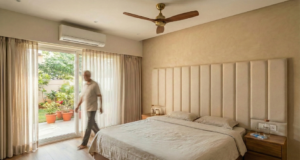
interior spaces while shielding them from direct views and glare. This creates interiors that feel bright yet protected.
In residential projects, especially those located in dense urban settings, this balance becomes essential. Louvers allow occupants to maintain visual comfort and privacy without resorting to heavy curtains or tinted glazing that block light entirely.
Architectural Expression and Visual Rhythm
Beyond performance, terracotta louvers contribute strongly to architectural identity. Their repetitive forms create rhythm and depth across façades, adding visual interest without ornamentation. The natural colour variations in terracotta further enhance this effect, allowing façades to age gracefully over time.
Whether used as full façade systems or as accent elements, terracotta louvers integrate seamlessly with modern, minimal, and vernacular-inspired architecture. They offer a material language that feels both grounded and contemporary.
Integrating Terracotta Louvers With Modern Design
Terracotta louvers are highly adaptable. They can be integrated into concrete, steel, and glass structures without appearing out of place. When paired with clean lines and restrained detailing, they add warmth and texture to otherwise minimalist buildings.
Designers often combine terracotta louvers with neutral colour palettes, large glazing panels, and landscaped buffers to create facades that feel balanced rather than heavy. This integration ensures that sustainability does not come at the cost of visual refinement.
Maintenance and Longevity
Unlike many façade materials that degrade or discolour over time, terracotta ages naturally. It develops a patina that enhances character rather than diminishing appearance. Maintenance requirements are minimal, typically limited to periodic cleaning.
This durability makes terracotta louvers a long-term investment. Their performance does not rely on coatings or mechanical systems, ensuring consistent benefits throughout the building’s lifespan.
Why Terracotta Louvers Are a Long-Term Design Choice
Trends in façade design come and go, but climate-responsive materials remain relevant. Terracotta louvers offer a timeless solution that responds to environmental conditions while elevating architectural quality.
Their ability to reduce heat, enhance comfort, and support sustainable living positions them as more than a stylistic choice. They represent a thoughtful approach to design that prioritises both human experience and environmental responsibility.
Designing Climate-Responsive Facades With Intention
Successful façade design requires careful planning. Louver dimensions, spacing, orientation, and structural integration must be tailored to each project. When designed without context, even sustainable materials can underperform.
At House of Grey, façade systems are approached holistically. Terracotta louvers are designed as part of an integrated architectural strategy that considers climate, orientation, aesthetics, and lifestyle. The result is a façade that performs quietly yet effectively, shaping homes that are comfortable, responsible, and enduring.