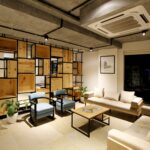
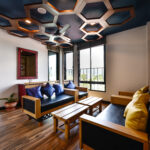
See the Full Project here>>
Grey has firmly established itself as the foundation of modern interior design. Across luxury apartments in Gachibowli and contemporary villas throughout Hyderabad, monochrome interiors are no longer viewed as a passing trend. They represent a refined design philosophy rooted in balance, calm, and understated luxury. However, one question consistently concerns homeowners considering a grey-led home: will it feel dull or lifeless?
The answer lies not in the colour itself, but in how it is used. Grey, when layered thoughtfully, can create spaces that feel elegant, warm, and timeless. When applied without strategy, the same colour can appear flat and uninspiring. Understanding the art of layering is what transforms monochrome interiors from ordinary to exceptional.
Rethinking Monochrome Design
Monochrome interiors are often misunderstood as spaces dominated by a single shade repeated throughout. In reality, successful monochrome design relies on variation within a colour family. Grey interiors are crafted using a spectrum of tones, finishes, and materials that work together to create depth.
Warm and cool greys are balanced to avoid visual stagnation, while matte and reflective surfaces interact with light differently across the day. Soft textiles are paired with structured materials, and gradual transitions from light to dark shades guide the eye naturally through the space. The objective is subtle contrast that feels cohesive rather than overwhelming.
Creating Depth With a Layered Grey Palette
One of the most common mistakes in monochrome interiors is selecting a single grey tone and applying it uniformly across walls, ceilings, furniture, and flooring. This approach strips the space of character and dimension. Professional designers instead build a layered palette, typically working with multiple shades of grey distributed intentionally throughout the home.


Lighter greys are often used on walls to maintain openness, while mid-tone greys suit wardrobes and built-in cabinetry. Deeper shades such as charcoal or graphite are introduced through accents to anchor the design. Greige tones, which blend grey with subtle beige undertones, are especially effective in adding warmth. This careful layering ensures visual interest without disrupting the overall harmony.
The Role of Texture in Elevating Grey Interiors
In monochrome interiors, texture replaces colour as the primary design tool. Grey becomes visually engaging when it appears across a range of tactile surfaces. Fluted wall panels, soft boucle or linen upholstery, natural stone flooring, matte laminates, veneers, and textured paints all contribute to a rich sensory experience.
A living space that combines fabric seating, stone finishes, ribbed wall treatments, and muted cabinetry feels layered and luxurious despite its restrained palette. Texture introduces depth that colour alone cannot achieve, distinguishing premium interiors from basic executions.
Warming Up Grey With Thoughtful Accents
Grey interiors can feel cold if not balanced correctly. The key lies in incorporating warm elements that complement the monochrome aesthetic without breaking it. Natural wood finishes bring organic warmth, while metallic accents in brass, bronze, or champagne gold add subtle elegance.
Lighting also plays a critical role. Warm white lighting softens grey surfaces and enhances their depth, while natural fabrics such as cotton and wool add comfort and approachability. These elements work together to create interiors that feel inviting rather than clinical.
Lighting as a Design Element
Lighting is one of the most powerful tools in monochrome interiors. The same grey surface can appear dramatic, soft, or flat depending on how it is illuminated. Well-designed grey interiors rely on layered lighting that includes ambient, task, and accent sources.
Cove lighting highlights ceilings and architectural features, spotlights introduce shadow and depth, and statement fixtures provide visual breaks within the monochrome scheme. Without a considered lighting strategy, even the most carefully selected grey palette can lose its impact.
Adding Interest Through Architectural Details
In grey-led homes, architectural form becomes just as important as material selection. Design elements such as stepped false ceilings, fluted or grooved wall panels, minimal mouldings, and custom niches introduce rhythm and structure.
These features ensure the space feels intentionally designed rather than simply decorated. Architectural detailing adds movement and character, preventing monotony while maintaining a clean, modern aesthetic.
Furniture That Enhances the Monochrome Look
Furniture selection requires particular attention in monochrome interiors. Pieces that closely match surrounding surfaces can easily disappear into the background. To avoid this, designers use contrast through tone, finish, and form rather than colour.
Light grey walls paired with darker furniture create definition, while varying finishes between fixed and loose furniture adds clarity. Sculptural furniture forms or bold silhouettes in deeper grey shades help anchor spaces without disrupting the monochrome harmony.
Styling With Restraint
Accessories in grey interiors should be intentional and minimal. Instead of introducing bright colours, styling focuses on texture, form, and contrast. Sculptural decor pieces, metallic accents, textured rugs, and artwork with strong line work or tonal variation elevate the space without clutter.
In monochrome interiors, restraint is essential. Every element should serve a purpose, reinforcing the sense of luxury through simplicity.
The Timeless Appeal of Grey Interiors
Grey continues to dominate premium interior design because of its adaptability. It complements modern, contemporary, and transitional styles with ease and evolves gracefully over time. A well-executed monochrome interior enhances resale value, allows for effortless styling updates, and creates a calm retreat from fast-paced urban life.
This enduring relevance is why grey-led interiors remain a preferred choice for luxury homes.
Executing Monochrome Interiors the Right Way
While monochrome interiors may appear effortless, achieving the right balance requires expertise. Material selection, lighting design, spatial planning, and execution must work together seamlessly. At House of Grey, monochrome design is approached as a craft, where every tone, texture, and architectural detail is carefully considered.
When planned and executed professionally, grey interiors feel refined, warm, and personal rather than generic. The result is a home that remains elegant, functional, and timeless for years to come.