See The Full Project Here>>>
Modern luxury interiors are no longer defined by excess or ornamentation. Instead, they rely on restraint, proportion, and carefully selected materials that add depth without visual noise. One such material that has become synonymous with refined contemporary design is fluted stone.
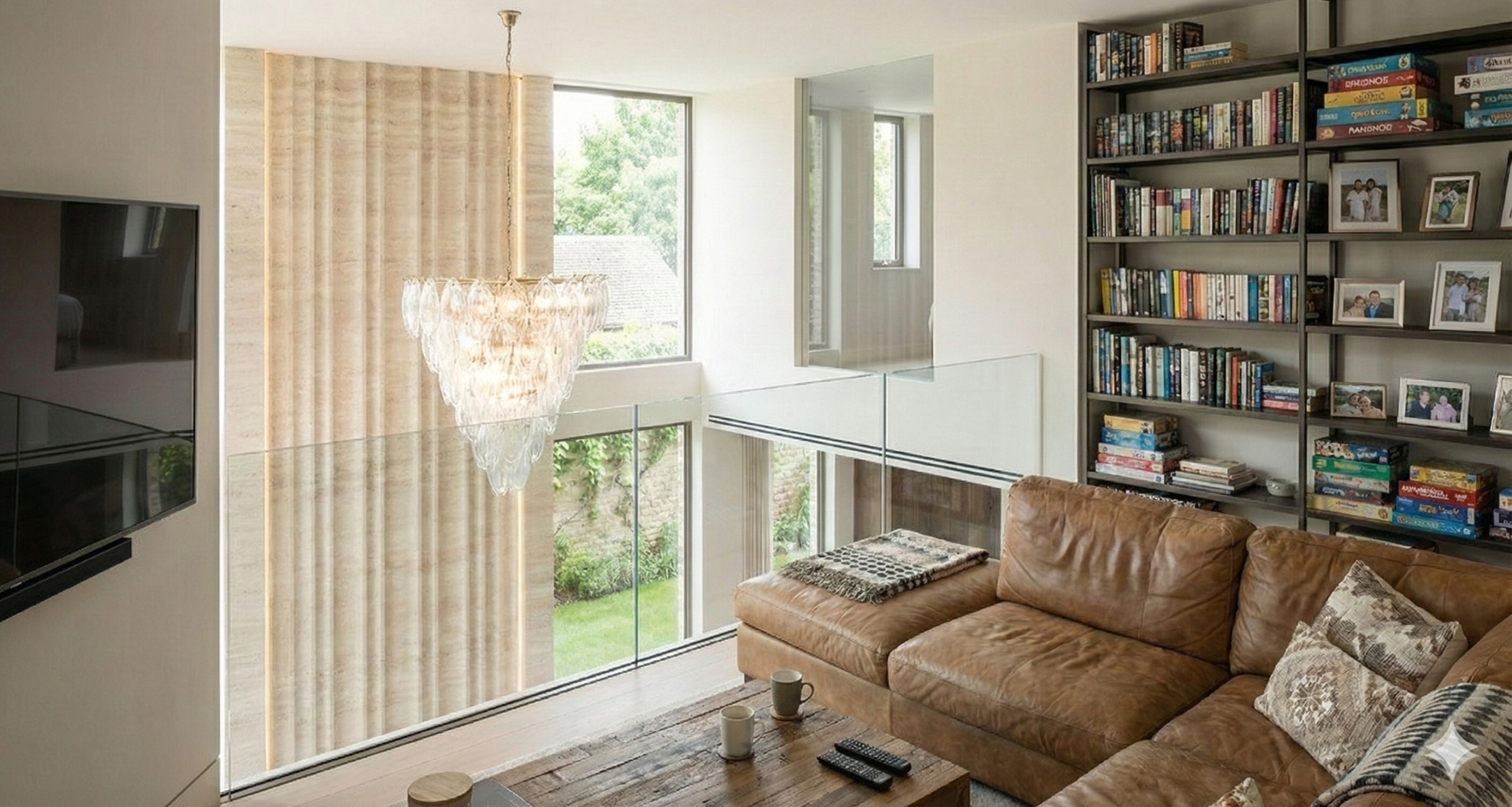
Seen across feature walls, façades, and architectural elements in premium homes, fluted stone introduces texture, rhythm, and a quiet sense of sophistication. While its appearance is subtle, its impact on spatial perception is significant. Understanding what fluted stone is and how it is used explains why it has become a defining element in modern luxury homes.
Understanding Fluted Stone
Fluted stone refers to natural or engineered stone that has been carved or milled with vertical grooves running along its surface. These grooves create a repetitive linear pattern that adds depth and shadow without relying on colour or ornamentation.
The technique originates from classical architecture, where fluting was used on columns to enhance verticality and elegance. In modern design, fluted stone has been reinterpreted with cleaner lines, minimal detailing, and contemporary materials, making it suitable for both interiors and exteriors.
Why Fluted Stone Is Gaining Popularity
The growing popularity of fluted stone reflects a broader shift towards texture-led design. As colour palettes become more restrained, texture takes on the role of creating visual interest. Fluted stone offers this without overwhelming a space.
Its vertical lines naturally draw the eye upward, making rooms feel taller and more structured. At the same time, the shadows created by the grooves change throughout the day, giving the surface a dynamic quality that responds to light.
The Role of Texture in Modern Luxury Homes
In luxury interiors, materials are chosen not just for appearance but for how they interact with space and light. Fluted stone adds a tactile layer that elevates otherwise simple environments. It allows designers to create focal points without introducing excess decoration.
Because the pattern is subtle and consistent, it complements minimal furniture, neutral palettes, and clean architectural forms. This makes fluted stone particularly effective in modern homes where clarity and balance are essential.
Where Fluted Stone Is Commonly Used
Fluted stone is highly versatile and can be applied across various elements within a home. Feature walls in living rooms and dining areas use fluted stone to create understated drama. In bedrooms, it adds depth behind headboards without overpowering the space.
Architecturally, fluted stone is also used on façades, columns, partitions, and staircase walls. In these applications, it enhances verticality and reinforces the architectural language of the home rather than acting as surface decoration.
Fluted Stone and Light Interaction
One of the defining qualities of fluted stone is how it responds to light. The grooves cast soft shadows that shift throughout the day, creating a living surface rather than a static wall.
When paired with controlled lighting such as wall washers or indirect illumination, fluted stone becomes even more expressive. The texture is revealed gradually, adding depth and sophistication without harsh contrast.
Natural Stone vs Engineered Options
Fluted stone can be crafted from natural materials such as marble, limestone, travertine, and sandstone, or from engineered alternatives designed to replicate the look. Natural stone offers organic variation and depth, while engineered options provide consistency and greater control over finish.
The choice between the two depends on design intent, budget, and maintenance considerations. Both options, when executed well, can achieve a refined and luxurious outcome.
Why Fluted Stone Feels Timeless
Trends in materials often fade when they rely heavily on novelty. Fluted stone, however, is rooted in architectural history. Its modern appeal comes from reinterpretation rather than reinvention.
By stripping away ornamentation and focusing on proportion and texture, fluted stone remains adaptable to changing design styles. It can feel contemporary today and remain relevant years into the future, making it a long-term design investment.
Maintenance and Longevity
Despite its detailed appearance, fluted stone is durable and low maintenance when properly installed. Regular dusting and periodic cleaning are typically sufficient to maintain its appearance.
Because the texture is integral to the material rather than applied superficially, wear and aging tend to enhance character rather than detract from it. This durability contributes to its appeal in high-traffic areas and long-term residential projects.
Why Professional Execution Matters
Precision is essential when working with fluted stone. Groove depth, spacing, alignment, and lighting must be carefully coordinated. Poor execution can result in uneven patterns or visual clutter that diminishes the intended effect.
At House of Grey, fluted stone is treated as an architectural element rather than a decorative add-on. Each application is designed in relation to space, proportion, and light, ensuring the texture enhances the home’s overall design language.
The Texture Defining Modern Luxury
Fluted stone represents a shift in how luxury is expressed. It moves away from overt statements and toward subtle, material-driven sophistication. Through texture, rhythm, and light interaction, it creates spaces that feel calm, structured, and enduring.
In modern luxury homes, fluted stone is not just a trend. It is a defining texture that reflects thoughtful design and timeless architectural values.